PT-404: Decay Protocol
First-Person Puzzle / Psychological Thriller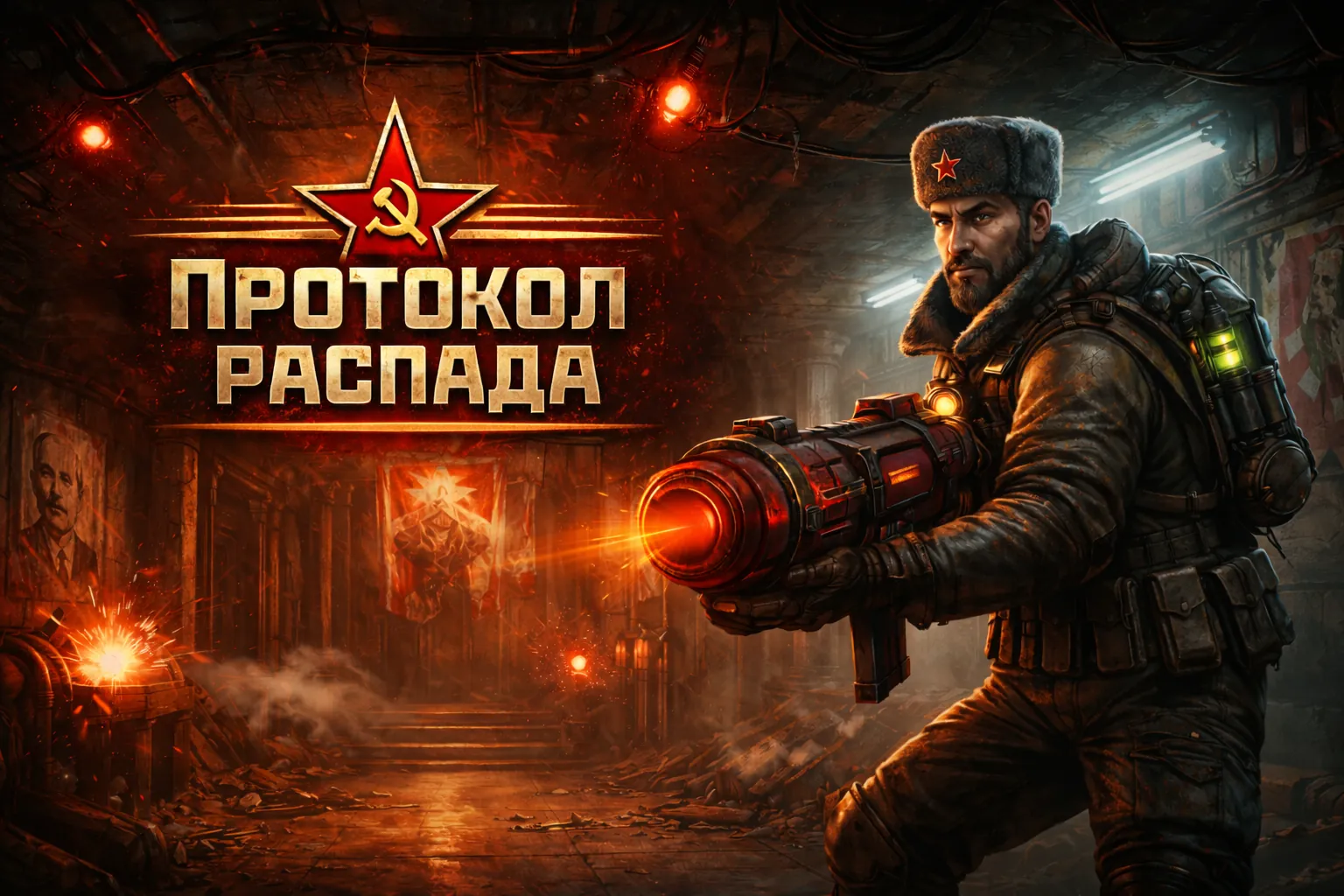
Core Concept
PT-404: Decay Protocol is a first-person puzzle game set in Russia between 2000–2010. The player awakens inside a massive, abandoned Soviet-era bunker. The air inside is toxic and slowly killing them.
The player discovers an experimental Soviet device called PT-404 (Portal Teleporter) — an unfinished secret development project by Soviet engineers. Using this unstable portal device, players must solve environmental puzzles to move section by section through the bunker before time runs out.
The Hidden Truth
- You are unknowingly part of a human experiment
- The bunker is monitored through surveillance cameras
- Someone is watching
- The environment is physically and ideologically decaying
Central Theme: Decay
Physical, systemic, psychological, and political decay manifest throughout the experience. Every mechanic, visual, and design decision reinforces the concept of deterioration.
Four Pillars of Decay
Physical Decay
- Rusted metal structures
- Cracked concrete walls
- Water leakage
- Broken electrical systems
- Flickering lights
Systemic Decay
- Failing infrastructure
- Malfunctioning doors
- Inconsistent power supply
- Corrupted security systems
Psychological Decay
- Isolation
- Paranoia
- Being constantly observed
- Uncertainty about reality
Ideological Decay
- Soviet propaganda posters
- Old Russian radio broadcasts
- Faded Soviet flags
- Abandoned political messages
GAMEPLAY MECHANICS
Portal Device (PT-404)
An unstable experimental portal teleporter. Fire two connected portals to navigate through broken architecture and solve environmental puzzles before toxic air levels become lethal.
Toxic Air System
Your survival timer. As air toxicity increases, the UI begins to malfunction—timer flickers, numbers distort, warnings overlap. Higher toxicity = less reliable information.
Decaying Infrastructure
Force open rusted doors by redirecting energy through the PT-404, but each action increases air toxicity. Progress requires sacrifice—survival becomes harder.
Surveillance
Visible cameras throughout the bunker create constant psychological pressure. You feel watched. The player cannot fully trust what information the deteriorating systems provide.
Environmental Puzzles
Navigate section by section through the bunker. Each room presents spatial and systemic challenges that demand creative use of the portal device under time pressure.
Systemic Failure
As you progress, digital systems become unreliable. This mechanic makes the theme experiential—players feel collapse rather than just observing it.
PROJECT NOTES
Project Overview
This project is focused on creating a dark, atmospheric game set inside a decaying Soviet Union bunker. The main goal was not only to develop a playable game, but also to create a strong emotional experience for the player. The player wakes up in an unknown underground facility and must find a way to escape. The environment itself plays a key role in storytelling, communicating what has happened without directly explaining everything. The atmosphere is intentionally designed to feel oppressive, uncomfortable, and psychologically heavy — representing not only physical decay, but also the collapse of a once powerful system, including its ideas, structure, and identity.
Research & Sources
During development, I used a wide range of research sources to support both the visual design and the overall concept. YouTube tutorials were used to learn how to implement specific gameplay mechanics inside Unreal Engine. Wikipedia provided historical context related to the Soviet Union, and I studied real images of Soviet bunkers to better understand their structure, materials, and atmosphere.
I also used personal descriptions from family members to capture the emotional and psychological feeling of such environments — going beyond visual accuracy to focus on how the environment should feel to the player. User feedback was also an important part of the research process, helping identify issues and improve the game.
Use of AI Tools & 3D Asset Generation
I used multiple AI tools throughout the project to speed up development and improve efficiency. I tested several 3D generation platforms — Meshy AI produced models with poor polygon structure and caused import issues in Unreal Engine. Tripo AI generated higher-quality models but had strict monthly export limits. Hunyuan AI was impractical due to its unstable interface.
Because of these limitations, I chose Hyper3D AI as my main tool. Although its newer version (2.0) produced better results, it restricted downloads — by switching to version 1.5, I was able to preview and download models freely and regenerate assets until the desired result was achieved. After generating a model, I downloaded it in OBJ format, imported it into Unreal Engine, created a Blueprint, adjusted scale, and applied materials. Once satisfied, I converted it into a Static Mesh for better performance.
Image Generation & Visual Development
For visual development, I used ChatGPT and Gemini to generate reference images of assets and environments. I often generated multiple variations of the same object to find the best version in terms of quality and style, switching between platforms when usage limits were reached. These generated images were not used directly in the game but served as a base for further 3D development, helping maintain a consistent visual style across the project.
Website Development
The website was developed gradually and was not created from a single prompt — it was built after learning web development skills in college. I used multiple AI tools including ChatGPT, Gemini, DeepSeek, Grok, and Claude to assist with building and improving the site. It went through continuous updates as I learned new techniques, with bugs fixed and new features added step by step. The website serves as a portfolio and presentation platform where the project can be accessed and explored.
Game Evolution
The game changed significantly during development. The early version of the project was completely different and is available on Itch.io under the name "VOID BREAKER." Over time, I redesigned the concept to focus on the Soviet bunker setting and the theme of decay. The visual style was aligned with the design of the website, and gameplay was restructured to focus more on portal mechanics — making the project more unique and better connected to its core idea.
Asset Creation Approach
All assets used in the game were either created or generated by me. None were downloaded from external 3D model platforms. I am capable of creating all assets manually using 3D software, but doing so would require a significant amount of time. Because of this, I chose to use AI tools to speed up the process and focus more on gameplay systems — portal mechanics, puzzles, and player interaction — which are the key elements of the game.
Audio Development
For audio, I used free sound effects from Pixabay for UI interactions such as button clicks. Background music was generated using Suno AI. For the lobby, I used the Soviet anthem to match the theme and atmosphere of the game.
Problem Solving & Technical Challenges
One of the main challenges was performance. The game was expected to run at 60–120 FPS but initially ran at around 27–30 FPS. To solve this, I converted Blueprint objects into Static Meshes, removed unnecessary BSP brushes, optimised the level design, and adjusted engine settings. Despite these optimisations and support from tutors, performance only improved to around 45–50 FPS — the exact cause could not be identified and may relate to deeper engine or project limitations.
Another issue occurred with the portal system. After taking a break and returning to the project, I found the problem was caused by an incorrectly connected node in the Blueprint. Once fixed, the system worked correctly.
Use of Tutorials & External Learning
I used online tutorials to learn how to implement portal systems. However, some tutorials did not fully explain all aspects, including certain bugs, and results did not always match what was shown in videos. To better understand the system, I compared my work with existing implementations and adjusted my approach accordingly — helping me fix issues and deepen my understanding of the mechanics.
Impact of Feedback
Feedback played a significant role in improving the project. Users identified several issues: the game being too dark, unclear progression, confusing portal mechanics, lack of a pause system, and repetitive sounds. Based on this, I adjusted lighting to improve visibility, added visual guidance elements, reduced and balanced sound levels, and implemented a pause system — making the game more accessible and improving the overall player experience.
Personal Development & Reflection
This project helped me improve many skills including Unreal Engine development, Blueprint scripting, problem solving, optimisation, time management, and research. It also changed how I approach game development — I learned to focus more on the player experience, test ideas more carefully, and adapt quickly when facing problems.
Conclusion
Overall, this project represents a combination of creative design, technical development, and problem solving. I focused on building a strong atmosphere, implementing gameplay mechanics, and adapting to challenges. Although not all goals were fully achieved — especially in terms of performance — the project shows clear progress and learning. With more time, I would continue to optimise performance, improve level design, refine mechanics, and add more polish to create a more complete and stable experience.
ANONYMOUS FEEDBACK RESULTS
Identified Issues
During testing, anonymous user feedback was collected to evaluate the gameplay experience and identify areas for improvement within the project. Several key issues were consistently highlighted by players:
| Issue | Description |
|---|---|
| Excessive Darkness | The overall environment was perceived as excessively dark, which reduced visibility and affected gameplay clarity. |
| Unclear Progression | Game progression was not clearly communicated, making it difficult for players to understand where to go next. |
| Portal Gun Confusion | The functionality and purpose of the portal gun were not immediately intuitive, leading to confusion during gameplay. |
| Missing Pause Feature | The absence of a pause feature limited player control and negatively impacted usability. |
| Repetitive Audio | Repetitive audio elements, particularly similar sound effects across multiple interactions, created discomfort and reduced immersion. |
Response to Feedback and Improvements
In response to this feedback, a series of targeted improvements were made to enhance both usability and player experience:
| Issue Addressed | Action Taken |
|---|---|
| Excessive Darkness | The overall brightness of gameplay environments was slightly increased. This was done carefully to preserve the intended dark and oppressive atmosphere of the Soviet bunker setting, while improving clarity where necessary. |
| Unclear Progression | Additional visual guidance systems were introduced. These included enhanced lighting along key pathways, environmental markers, and more deliberate placement of objects to naturally direct the player's attention and movement through the level. |
| Portal Gun Confusion | Contextual visual cues were integrated into the environment. These elements help communicate where and how the portal system can be used, making the interaction more intuitive without relying on explicit instructions. |
| Missing Pause Feature | A pause system was implemented, allowing players to stop the game at any time using the "P" key. This significantly improved accessibility and gave players greater control over their experience. |
| Repetitive Audio | Audio design was refined. Repetitive and overly intense sound effects were adjusted and balanced to reduce player discomfort and create a more consistent and immersive soundscape. |
PROJECT GALLERY
DEVLOG VIDEOS
АРХИВ // PT-404 DEVELOPMENT LOGS // АРХИВ
MINI GAME
PT-404: DECAY PROTOCOL SIMULATOR